antisana
The Anti-Retreat Meditation Retreat
Mountain: Volcán Antisana
Altitude: 18,714 ft | 5,704 m
Location: Napo Province, Ecuador, 0°28′S 78°20′W
As my crampons bite into the steep ice wall around 5,700 meters, my mind finally shuts up. It had been buzzing since we left our warm sleeping bags, stepping into the calm night toward a giant white blob. While my pace crawled at 1.5 miles per hour, my thoughts raced like maglev trains: emails unanswered, relationships unresolved, places unvisited, things unbought, stories not written. In Buddhism, this is called “monkey mind”—attention leaping branch to branch, never still, always grasping for the next to-do, desire, or vague promise of satisfaction.
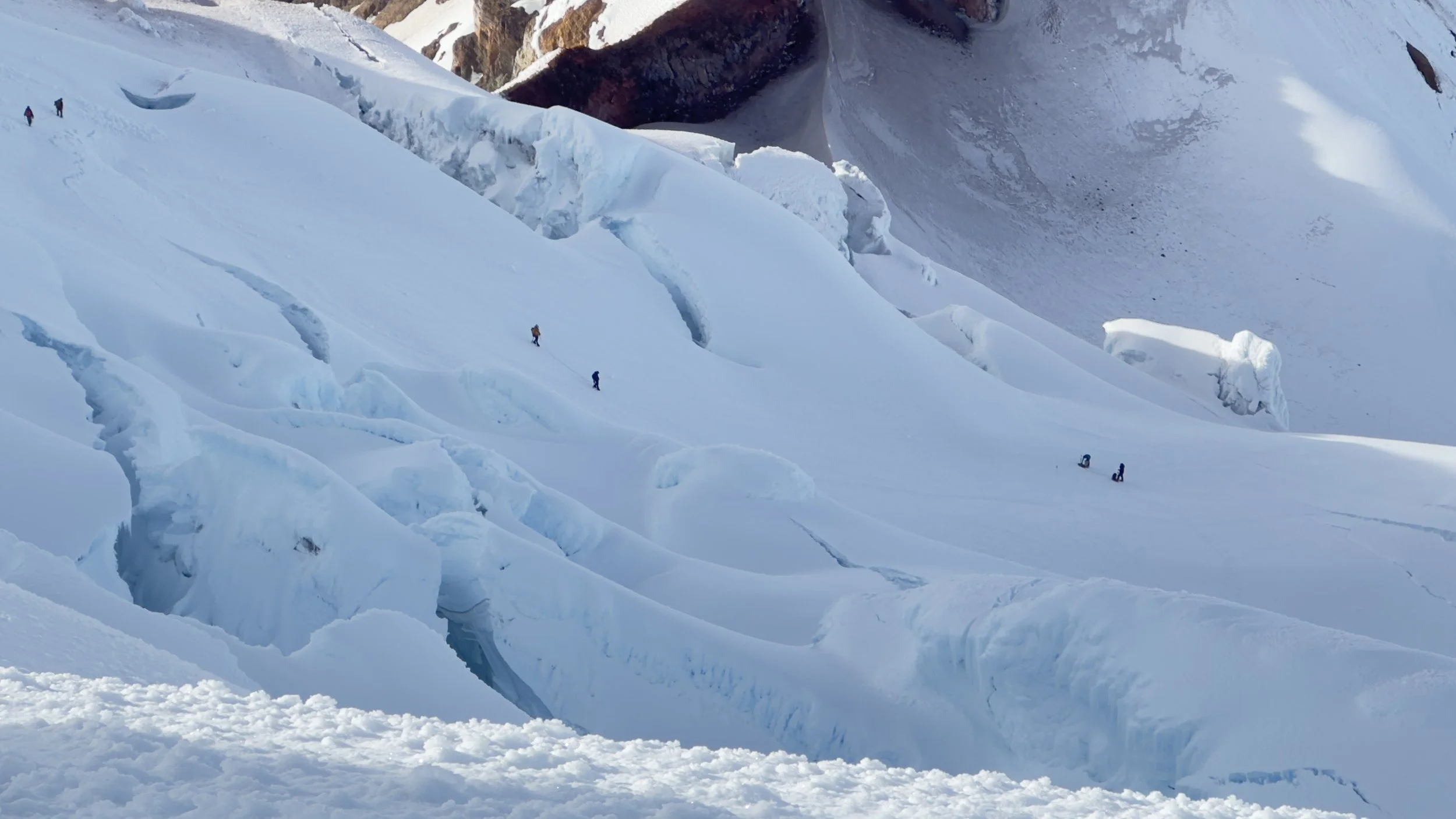
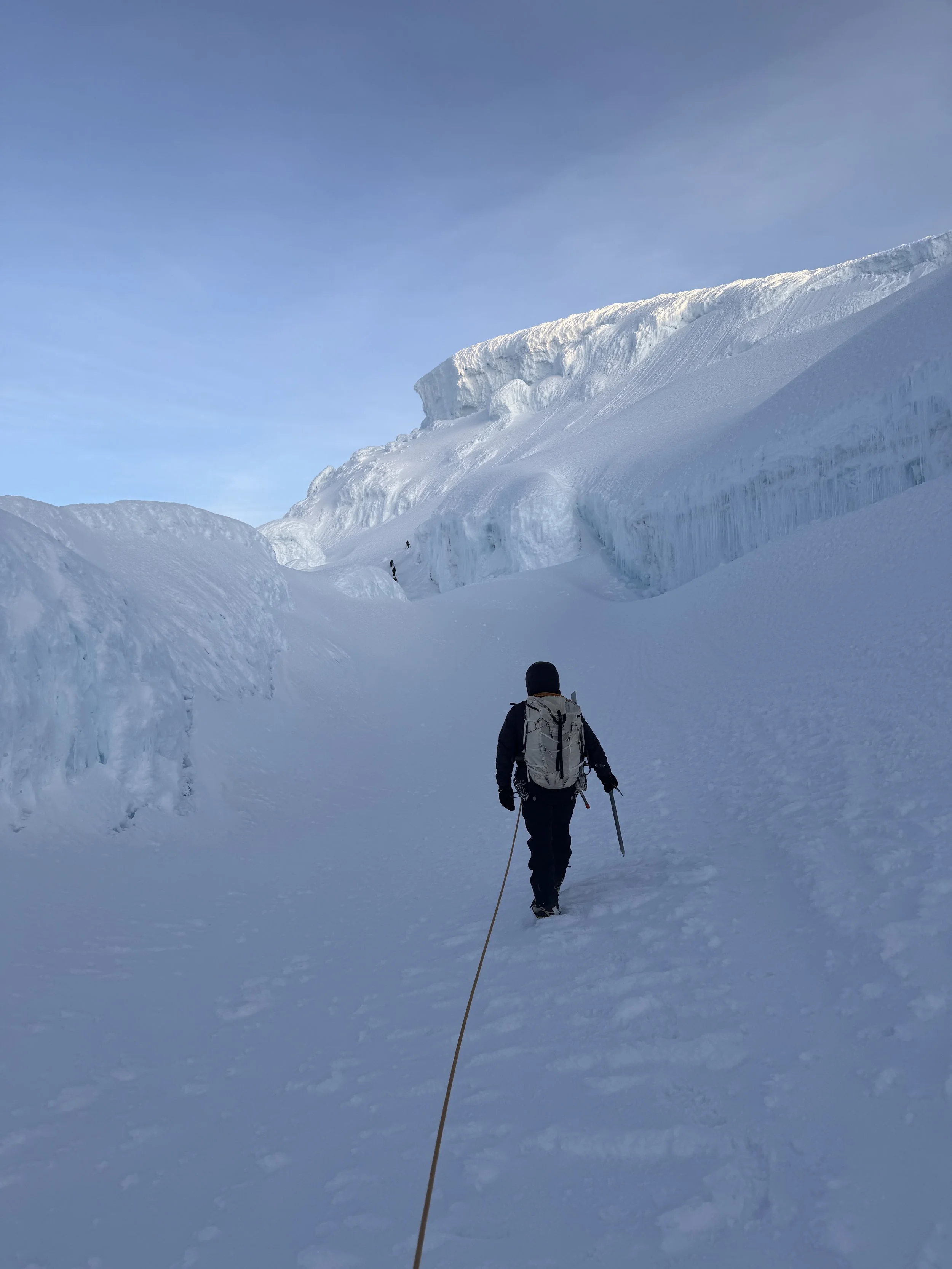
As we climb Antisana, there are only a few moments when my monkey mind finally quiets. The first is when we hit the steep, 55-degree ice wall. The steps are shallow—five centimeters at best. I slam the front points of my crampons into the slope, listening for the scrape that means steel has met something solid. I force myself to stand upright over my feet, not glued to the mountain like a limpet. The rhythm is slow and methodical, yet every movement is a small negotiation with gravity. Thoughts shrink to kick, breathe, trust. Three points of contact, always. No room for life debates or old regrets—the price of distraction is a slide into the void.
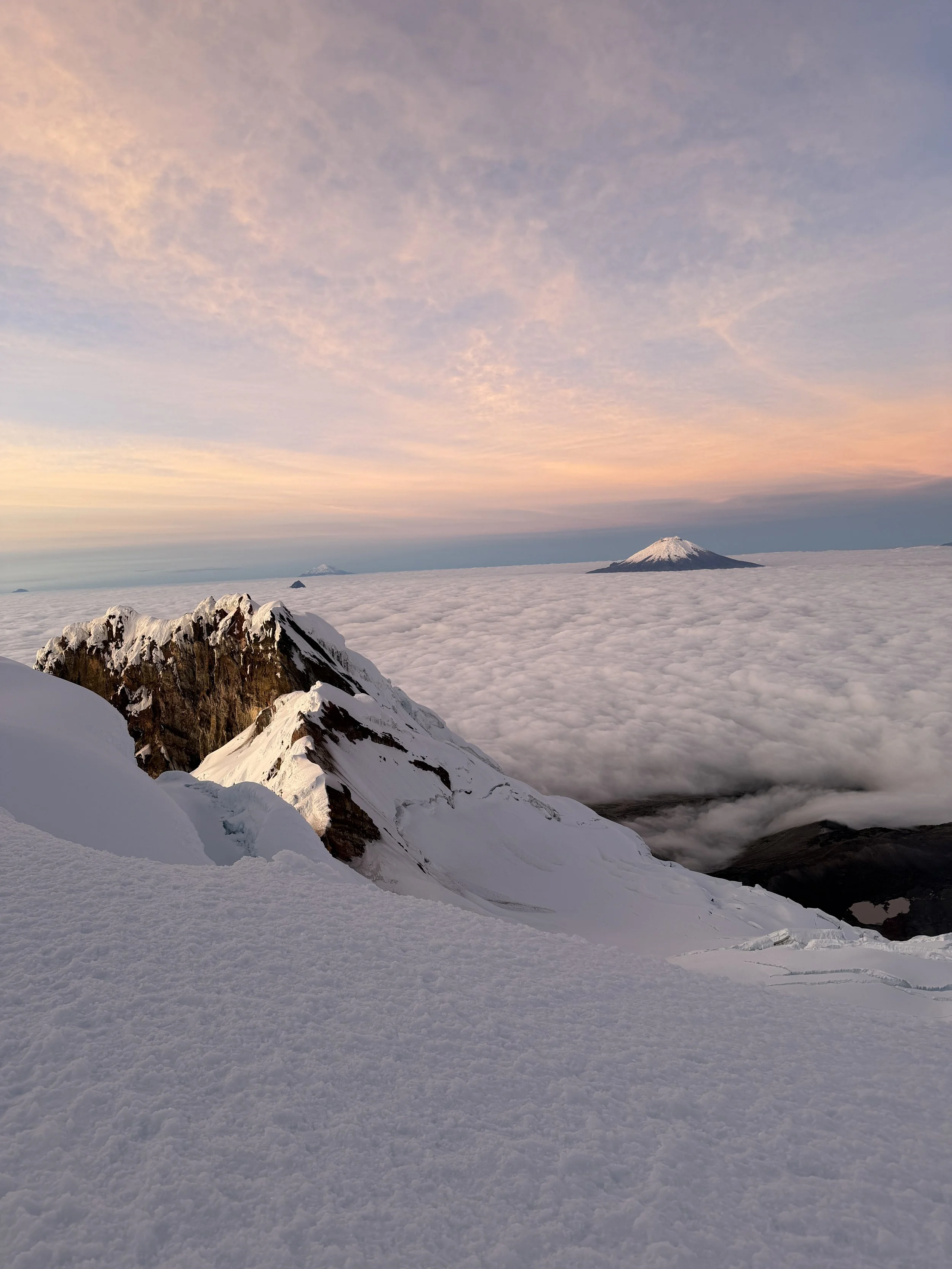
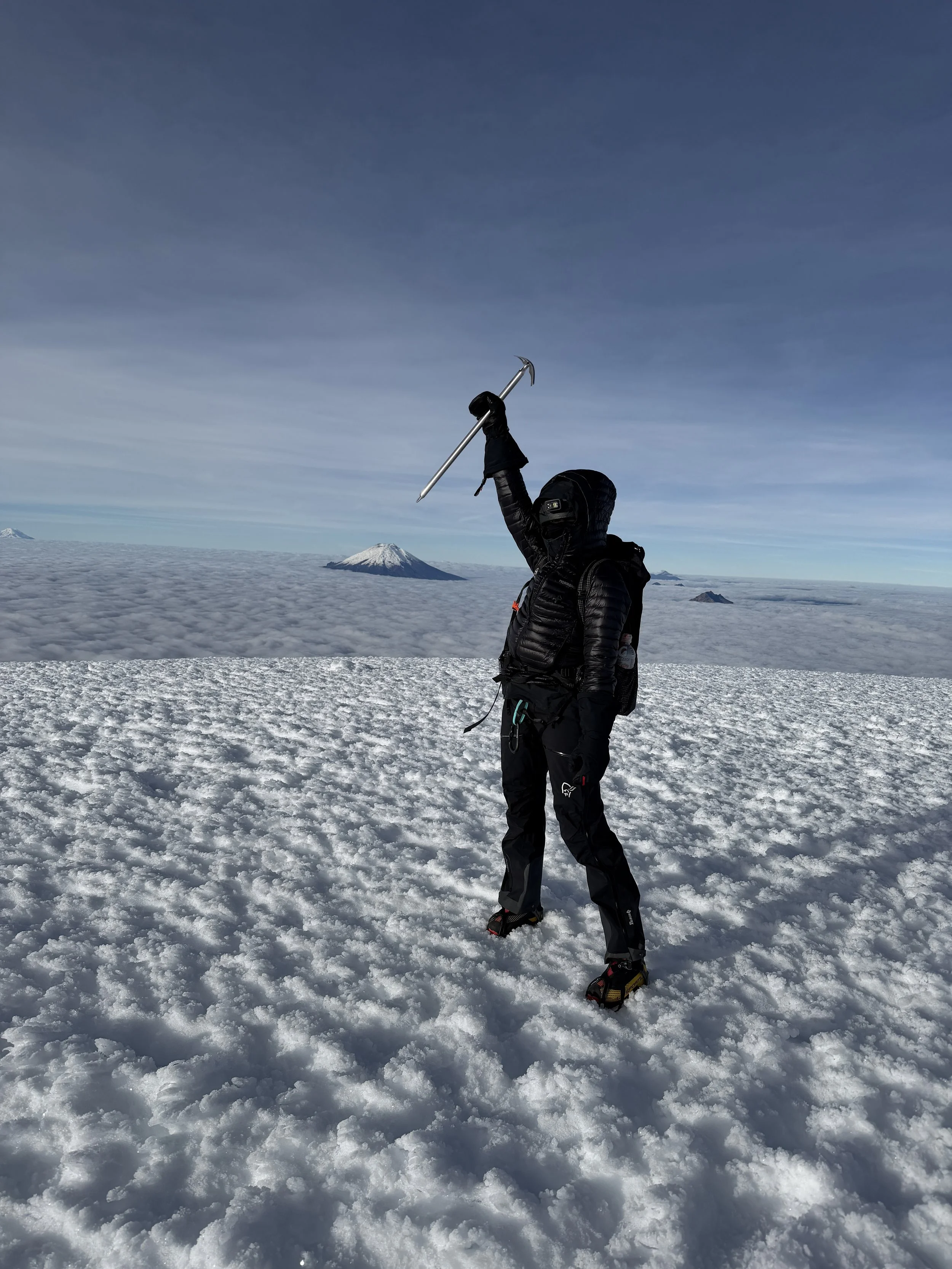
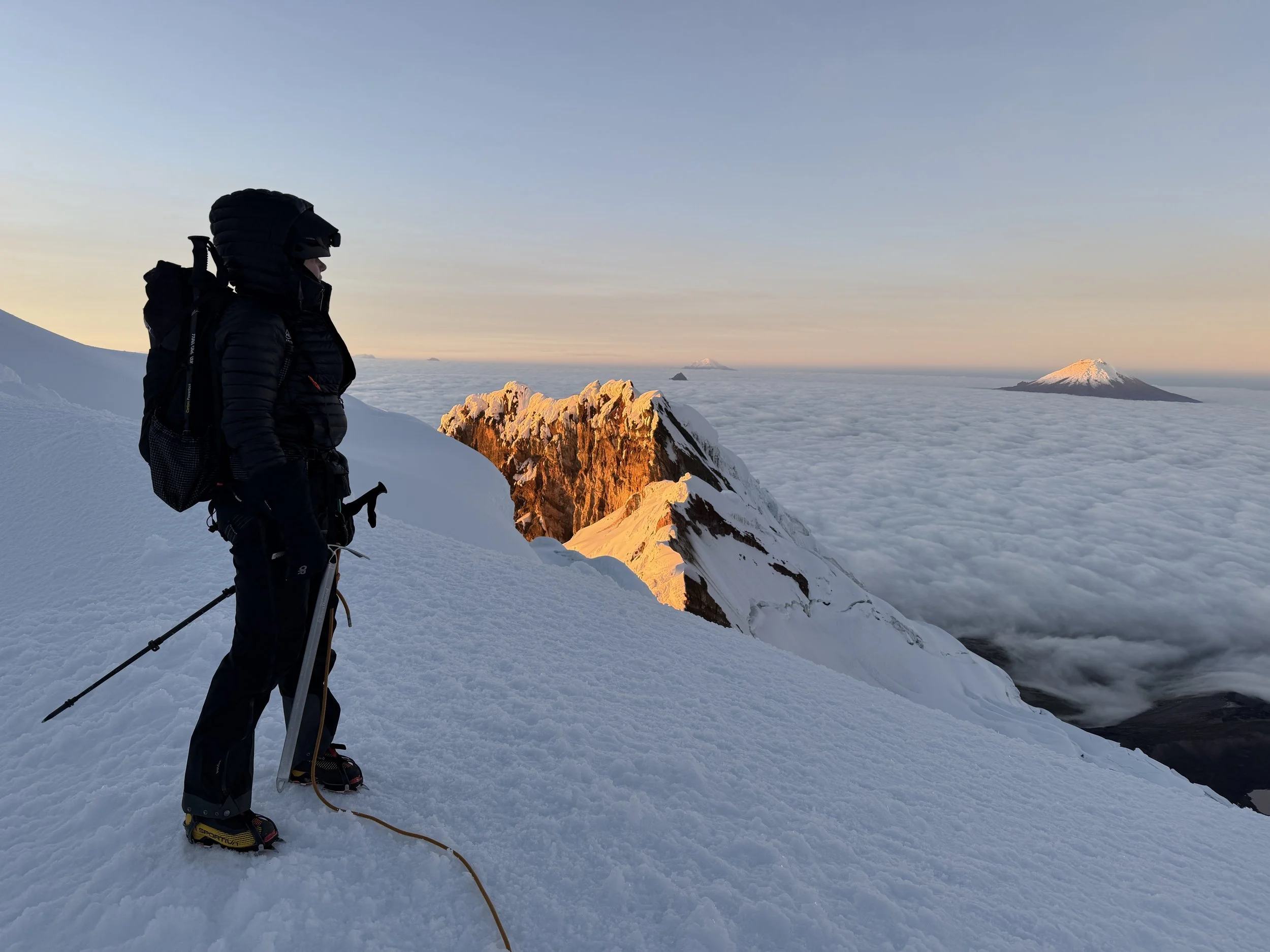
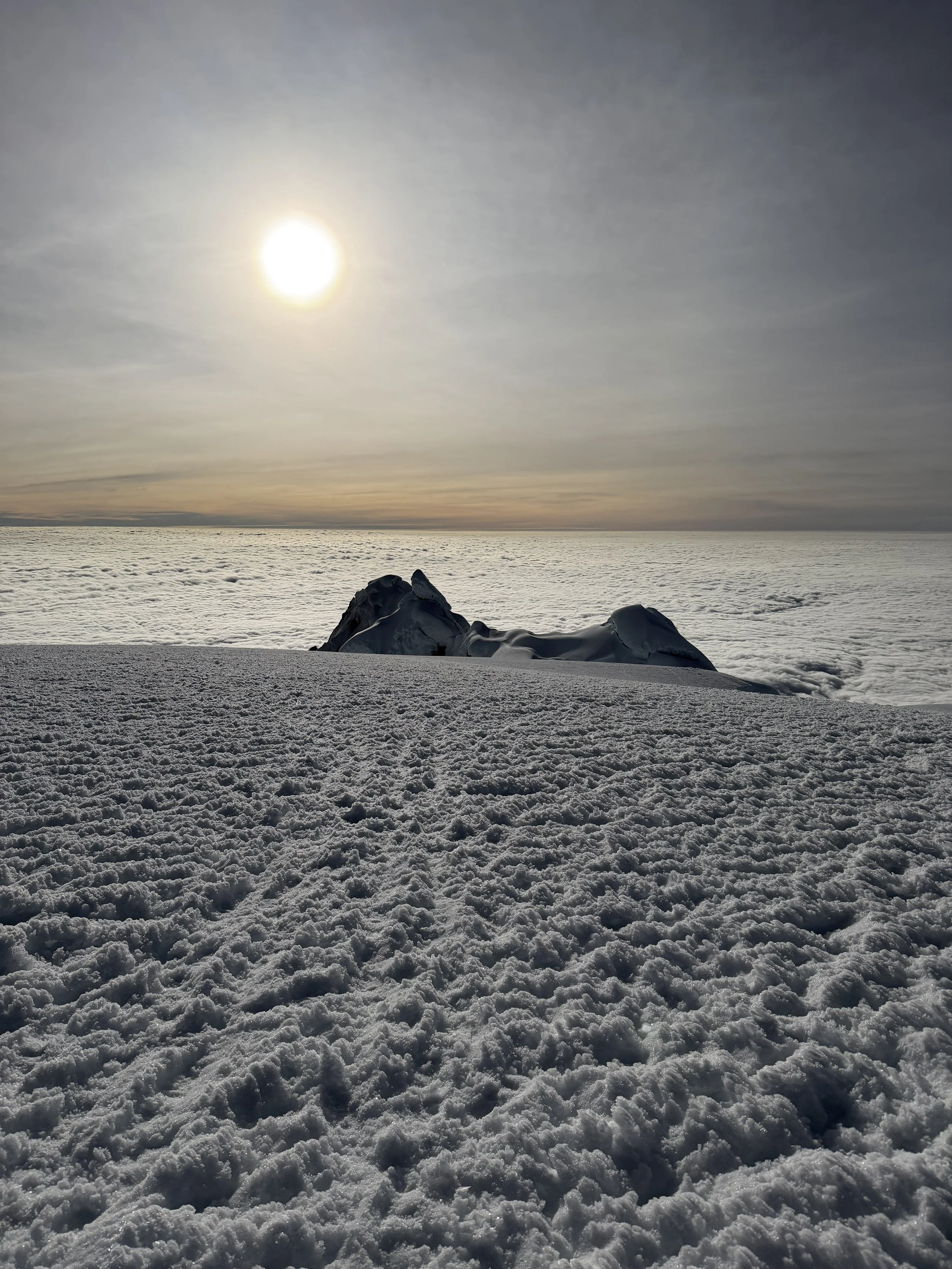
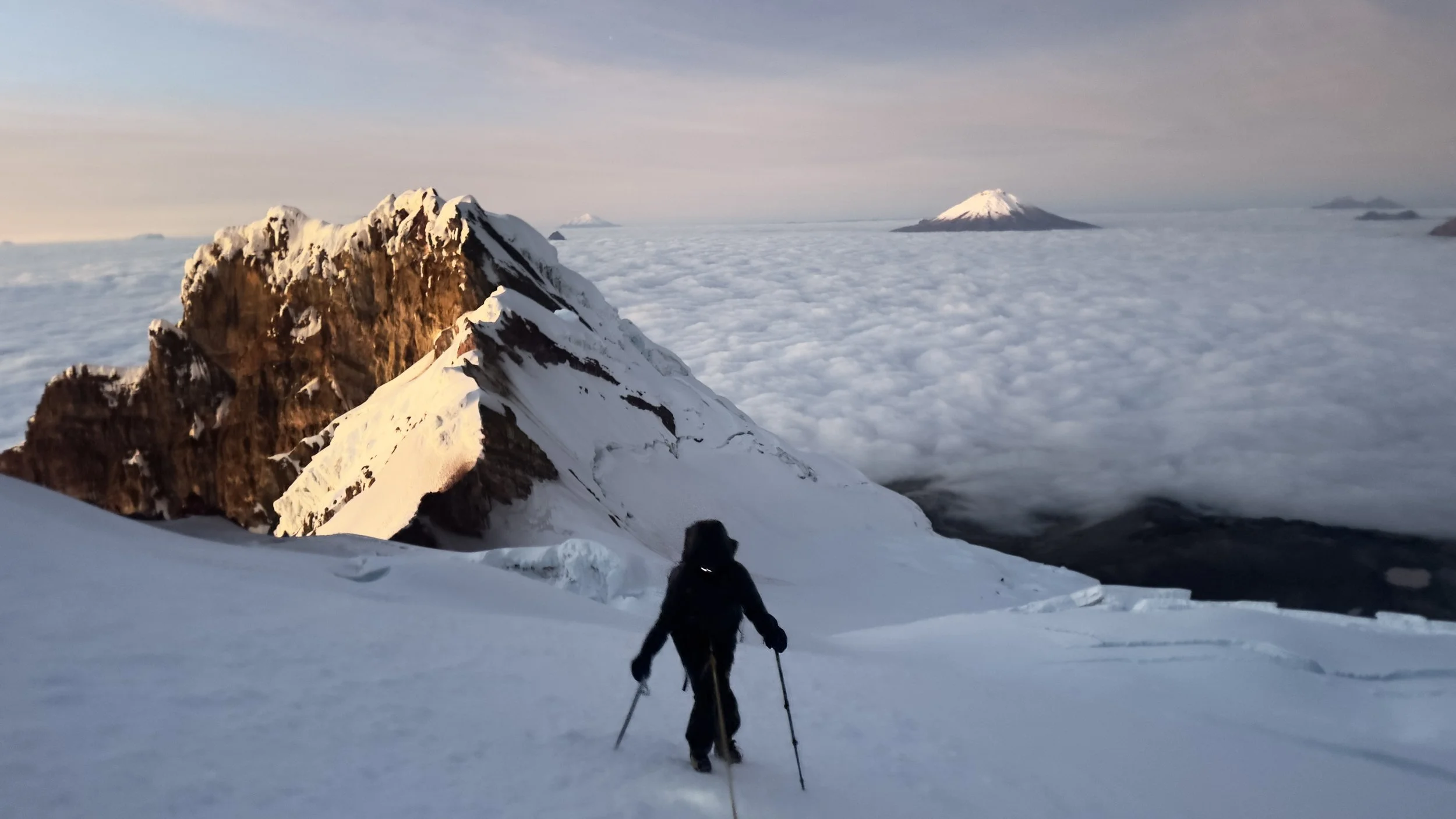
The second time the monkey quiets is when we reach the summit. As we emerge from the steep, stepped climbing and suddenly there is no vertical wall to ascend, the world opens into an ocean of clouds. The cloud sea is broken only by islands of other mountains in the Andean “Avenue of Volcanoes”: the perfect cone of Cotopaxi, the massive bulk of Chimborazo, El Altar's shy tip hiding its ferocity, the perky silhouettes of the Illinizas. I am short of breath, not just because of altitude, but because of the mute vastness above a humming world at the bottom. My monkey is baffled; it sits quietly, looks. For a brief moment, there is no optimization, no self-improvement project, no narrative. There is only cold wind and an impossible amount of space.
The recommended prescription for calming the monkey mind is meditation: you do not silence thoughts; you watch them jump. The stereotype is someone sitting perfectly still in a tidy pose in a white-glowing room or a lush landscape somewhere in Bali or Costa Rica. But there is also active meditation—while walking, running, hiking, climbing, dancing. What makes something a meditation is not the stillness of the body but the quality of attention. You listen to your breath, feel your steps, and notice your thoughts instead of immediately following them. You are like an observer, detached yet intimate. The rhythm of movement naturally regulates breathing and gives the restless body something to do, which sometimes quiets the monkey more easily than forcing stillness.
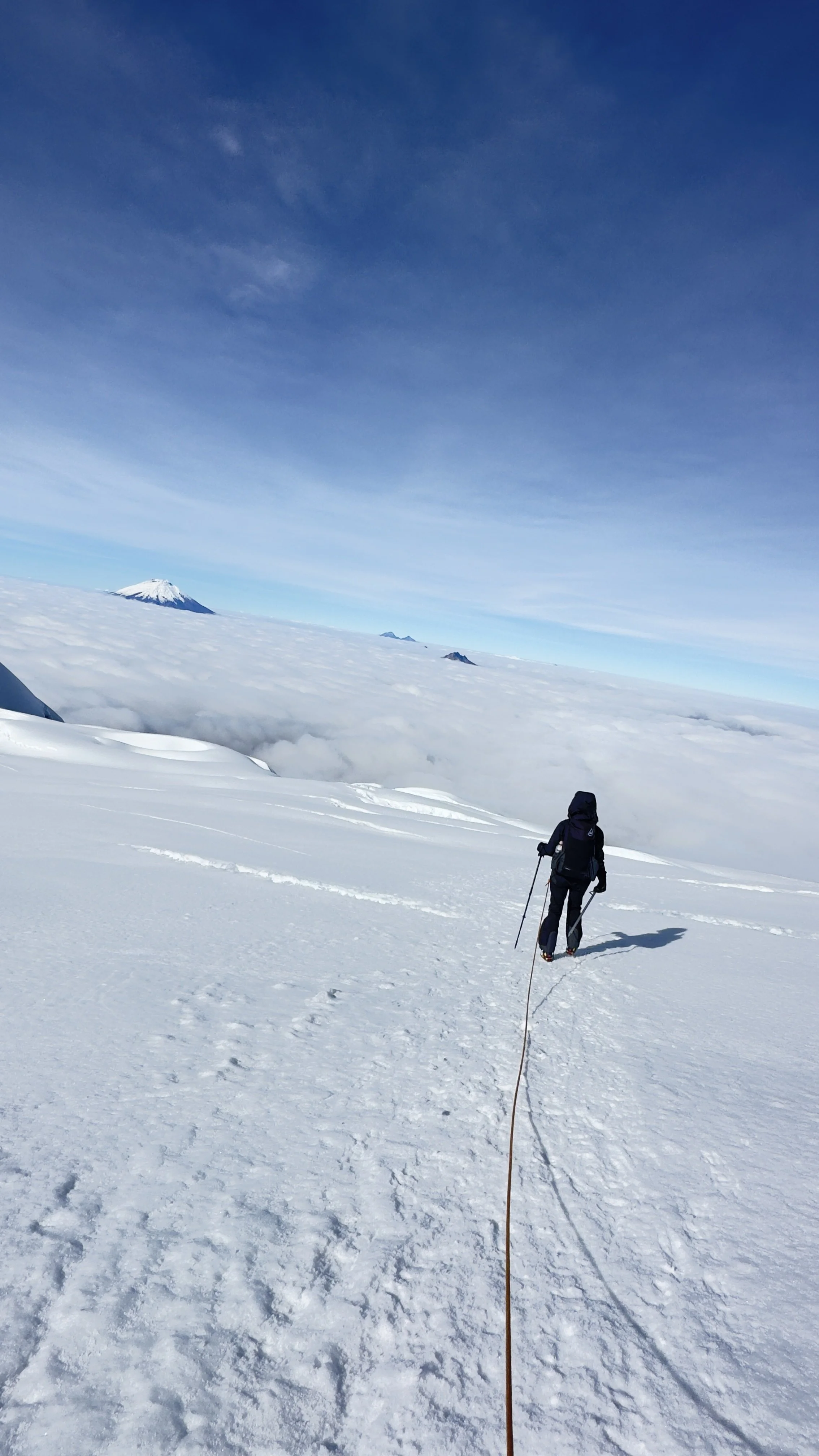
Mountain expeditions are my clumsy attempts at profound meditation. Antisana is not a spiritual retreat; it is cold, dangerous, and deeply uncomfortable. But the experience is meditative—the climb becomes a long conversation with the monkey. It complains about the freezing air, the numbness of toes, the harness digging into hips, and how absurd it is to be out here when civilized people are still asleep. It invents reasons to turn around and go down. My job is to keep climbing while the monkey screams. Kick, breathe. Place tool. Move foot. Move foot. Place tool. But this is only a rehearsal—the real performance happens back in everyday life, amid crowded streets, the luxury of convenience and abundance, and infinite entertainment. The methods and ways of meditation vary, whether fighting a monkey in lotus pose at a yoga retreat or on feet crossing crevices. But the essence remains: once the chatter fades, the world and important things come into focus.