chimborazo
HEART OF the ANDES
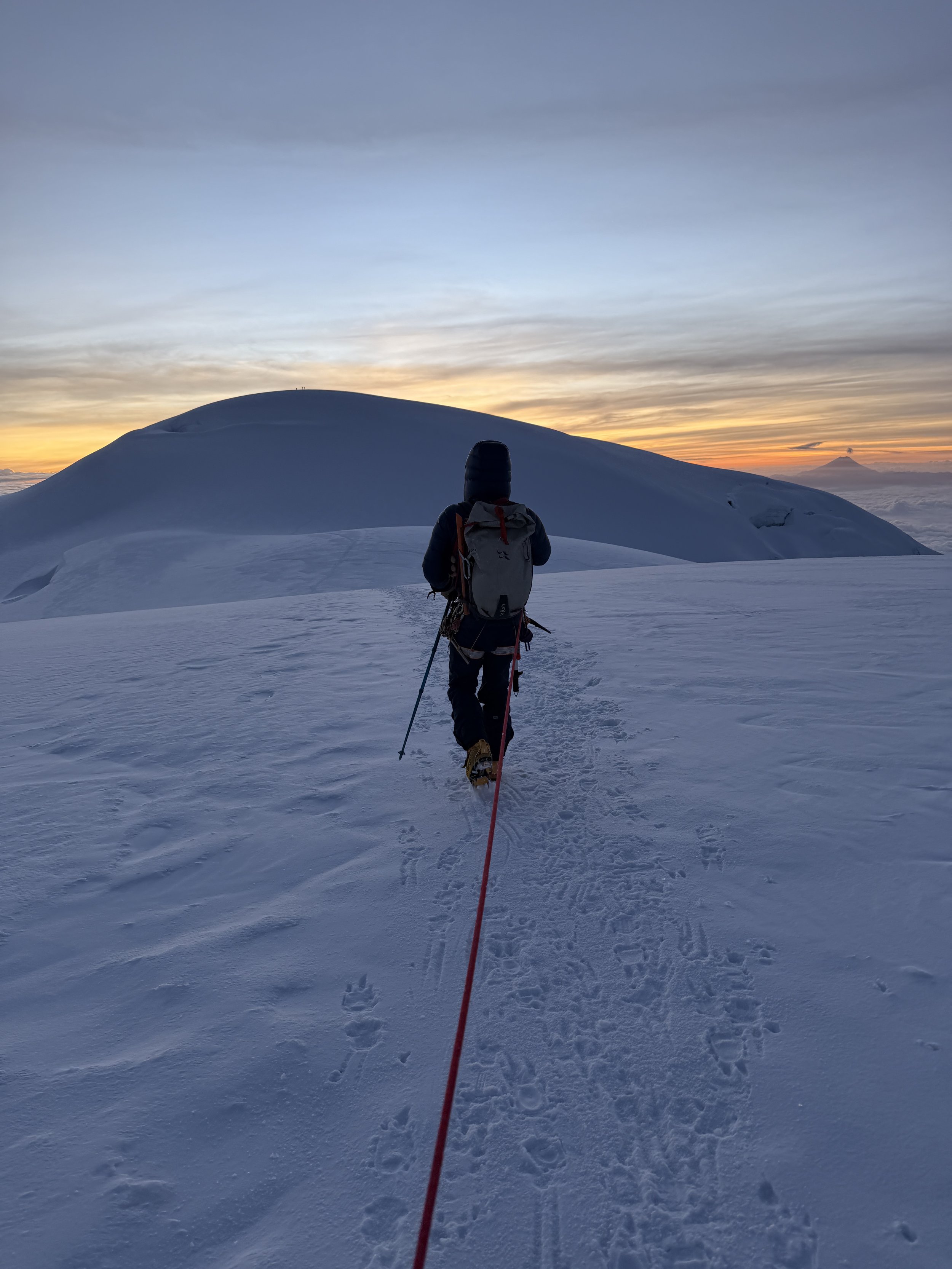
Mountain: Volcán Chimborazo
Altitude: 20,548 ft | 6,263 m
Location: Chimborazo Province, Ecuador, 1°28′S 78°49′W
One of my favorite paintings at the Metropolitan Museum of Art in New York is a massive, nearly six-by-ten-foot canvas called Heart of the Andes *. It is ostensibly a painting of Mount Chimborazo, but in truth it’s an amalgamation of sketches of several Ecuadorian volcanoes—Chimborazo, Cotopaxi, Antisana, Cayambe. The painting mixes them into a single, sublime panorama, representing the full climatic range from tropical to temperate to frigid. Painted by Frederic Edwin Church, the leading figure of the Hudson River School, it drew crowds who paid admission and examined it through opera glasses when it was first exhibited in New York.
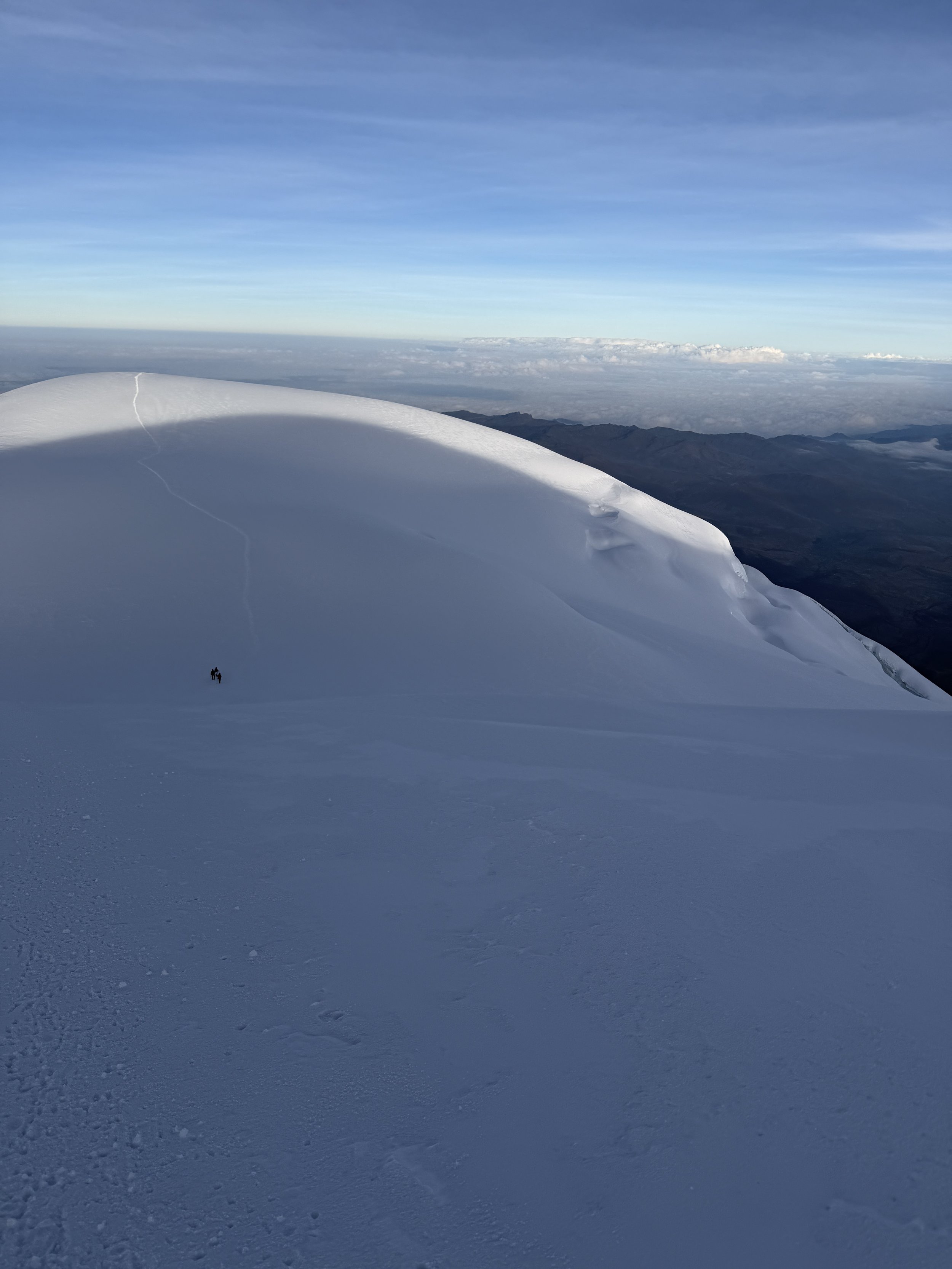
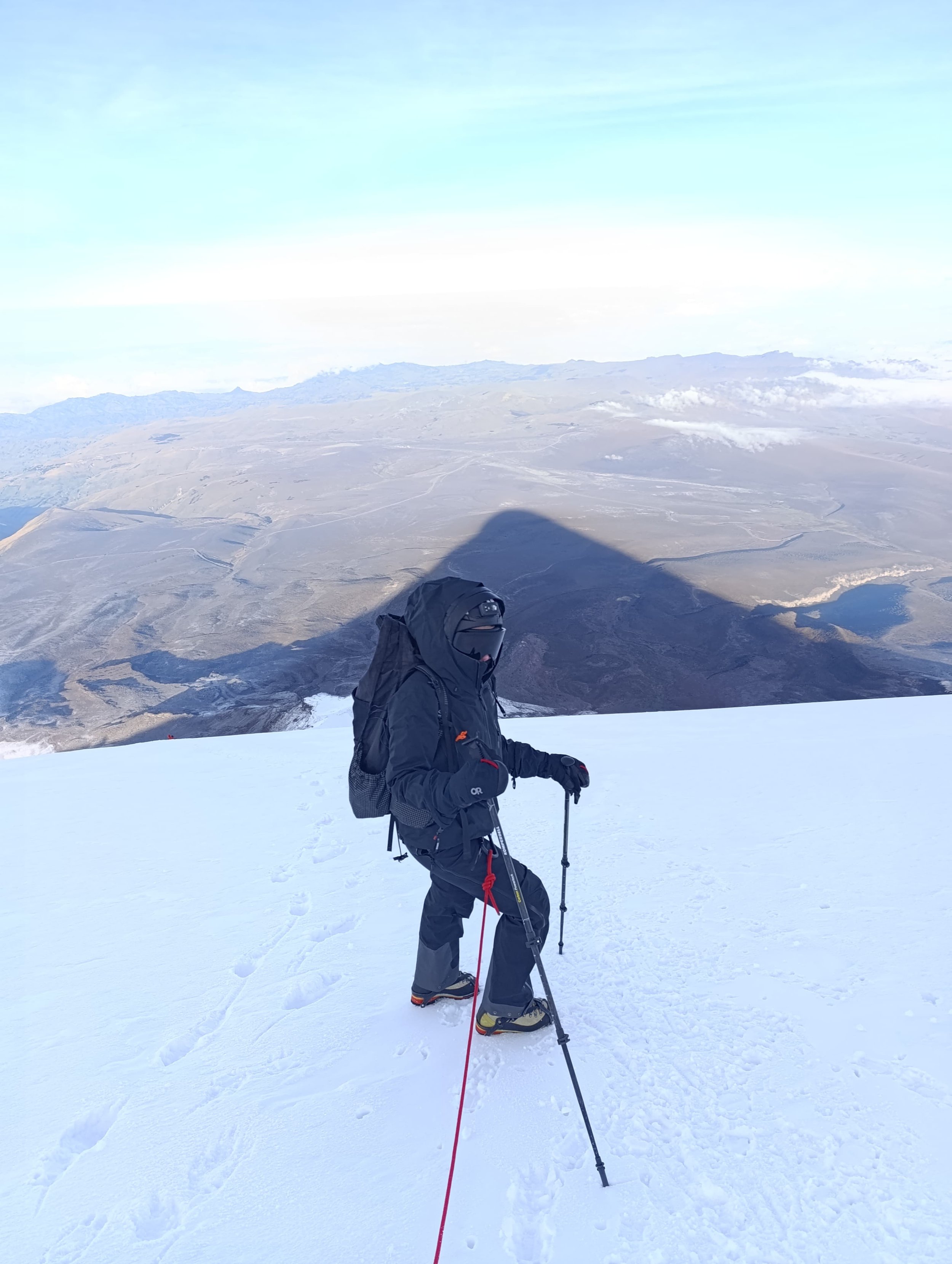
As I climb Chimborazo’s slopes, I replay Church’s image in my mind. In his painting, pastoral calm is overpowered by the luminous majesty of a snow-capped summit. My climb bears little resemblance to that serene canvas. There is only darkness, the bite of wind, and a forty-degree ice wall that shows no visible end when I lift my head. We zigzag in crampons, kicking steps into the frozen slope. The only sounds are my breath and the crunch of steel biting ice. Church painted the mountain from a comfortable distance, composing beauty. I am inside the mountain now, and there is nothing idyllic here—just cold, altitude, and an indifferent landscape where few things are meant to survive.
Church visited Ecuador twice (1853 and 1857), surviving challenging adventures and returning with a profusion of sketches—volcanoes, waterfalls, cloud formations, and the shimmering geometry of equatorial light. His inspiration came from the writings and expeditions of Alexander von Humboldt. Humboldt was the original adventurer: a naturalist, explorer, and geographer who transformed curiosity into remarkable expeditions through Latin America that reshaped the West’s understanding of the natural world. In 1802, he attempted Chimborazo, then believed to be the highest mountain on Earth. Though he did not reach the summit—turning back around 5,875 m—his climb became legend. Dressed in a frock coat and leather shoes, without oxygen or modern gear, he suffered nosebleeds and altitude sickness, yet his measurements became the foundation of biogeography.
I think of Humboldt’s ascent as I labor up the glacier at 2 a.m., two centuries later, wrapped in the ultimate luxury of modern mountaineering. On my feet are high-altitude plastic boots. Against my skin, a 300-gram merino-wool base layer feels silky-soft—it wicks moisture, cooling in exertion and warming at rest, and stays odor-free because natural lanolin kills bacteria. My mittens, pants, and outer-layer jacket are all made of Gore-Tex. Invented in 1969, Gore-Tex is a quiet miracle of engineering: billions of microscopic pores per square inch (20,000x smaller than a water droplet) block liquid rain, snow, or melt while letting water vapor (sweat) escape, so I stay dry outside and inside during five hours of glacier zigzags. This kind of technology surely would have delivered Humboldt to the summit and back. I move rhythmically, using ultralight carbon poles and an ice axe. My Vuarnet Edge 1613 glasses—the same model James Bond wears in No Time to Die—deflect the glare when the first light appears. In a way, there really is no time to die when you are dressed in this much competence.
Even nutrition is a luxury now. Two centuries ago, gentleman-explorers traveled with cooks and boxes of provisions. I carry a week’s worth of energy in my pockets. On one side, Clif Bloks—33-calorie chews that deliver glucose and fructose straight into the bloodstream, engineered to melt between breaths. In the other, Clif Peanut Crunch bars: 260 calories of condensed sweetness that serve as flavor, fuel, and comfort all at once.
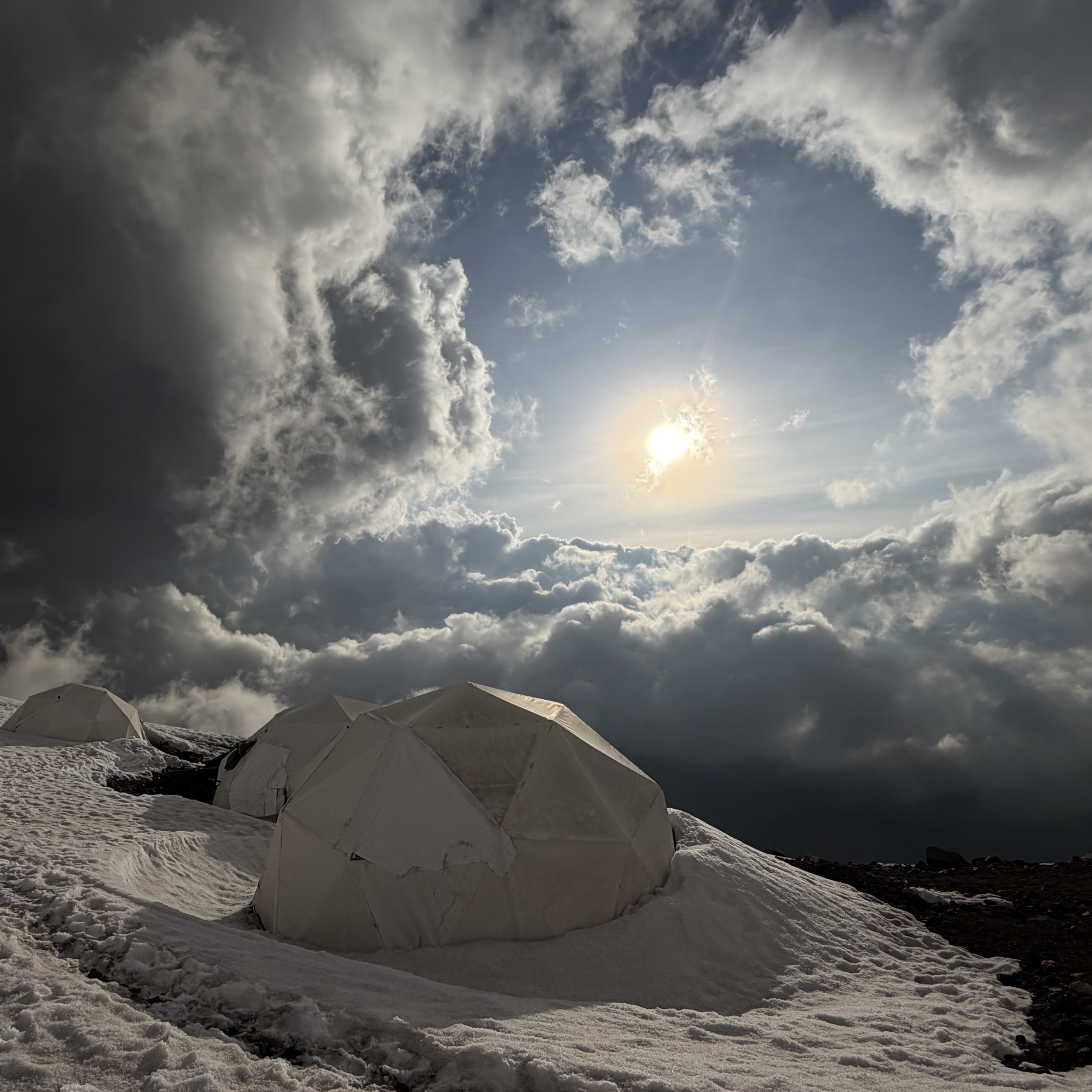
And then there is dinner at 5,300 m—the ultimate luxury, the kind Michelin stars can’t measure. It costs months of physical training, mental preparation, and thirty kilograms of gear carried two hours up the trail to Campo Alto, where humans try to resurrect a piece of civilization on a glacier. The food itself is simple: soup with toasted corn, a small piece of fish with mashed potatoes, and, for dessert, three slices of canned peaches. Simple, perfect, served in a small white dome perched on a snow ledge, two hours from the nearest human logistics. We eat it five hours before we will “wake up” again at 11 p.m.** to start our summit push.
Humboldt used his observations on Chimborazo to form a revolutionary new vision of how nature functions: predating modern ecology by decades and shifting science from isolated facts to holistic systems. He noticed how vegetation changed with altitude, mirroring the planet’s latitudes—everything was interconnected. I became so intrigued by von Humboldt’s work that I tracked down a rare first edition of his atlas "Atlas géographique et physique des Régions équinoxiales du Nouveau Continent" (1814) at the New York Public Library, available by request in the rare books and maps department. I pored over the exquisite diagrams that meticulously blended science with art. Church’s The Heart of the Andes is just an arty translation of Humboldt’s insight, capturing the entire climatic range—and I am trying to make it to the crown of the painting.
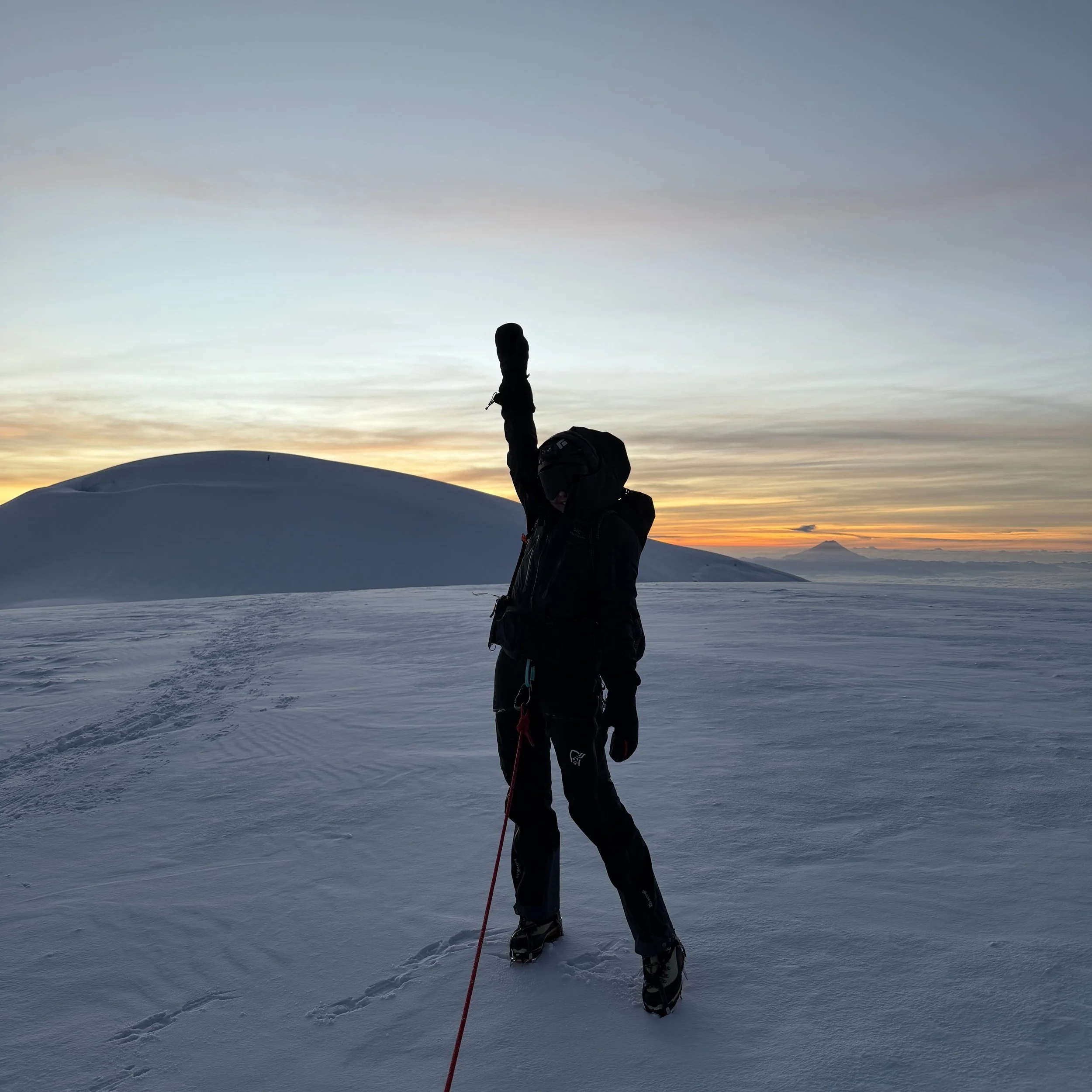
Humboldt never reached Chimborazo’s top. Edward Whymper finally did in 1880***, nearly a century later. Yet his great revelation on Chimborazo’s slopes—that nature is an interconnected whole—remains his most enduring peak. We reach the summit just as the sun rises. It is spectacular—volcanoes rising from a white sea of clouds, the Ruta de los Volcanes stretching endlessly north and south. I wonder if we gave Church Gore-Tex and Clif Bloks, would he summit—or trade his oils for an iPhone shot?
*I love this painting so much that for my birthday in 2024, my friends and I divided The Heart of the Andes into twenty squares and each of us drew one in charcoal. The finished fragments now hang in my apartment—a reminder of friendship, ambition, and the beauty of building something together.
**Few people truly sleep before a high-altitude ascent. Climbs begin in the deep cold of night, when the snow is firm and winds are calm. The reward, if you move steadily enough, is to meet sunrise on the summit—and to be down before noon, when the equatorial storms begin to turn.
***Chimborazo has two summits, and its highest is called Whymper Peak (Chimborazo has other summits—Veintemilla, Politécnica, Nicolás Martínez—but Whymper is the highest). There are many other things named after Whymper in Ecuador: streets, plazas, gastro bars, and clothing stores.